AI-based Python
vulnerability
Injection and attack
Open-source, cross-platform software for Python vulnerability injection and attack using AI, with a comprehensive, manually reviewed, dataset with vulnerabilities and corresponding patches.
VAITP
What is VAITP?
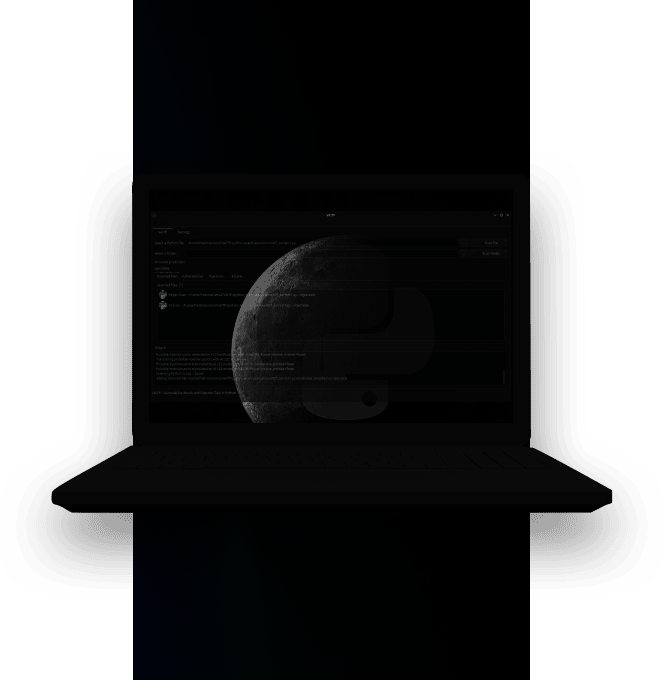
VAITP is a cross-platform software that uses AI models to inject and attack realistic vulnerabilities in Python scripts.
32
Detectable vulnerabilities
8
Injectable vulnerabilities
2
Attackable vulnerabilities
3
AI Model types
AI model types
Featured AI models

BoW
The bag-of-words models represent textual data by counting the occurrence of words, disregarding semantics, grammar and word order.
CNN
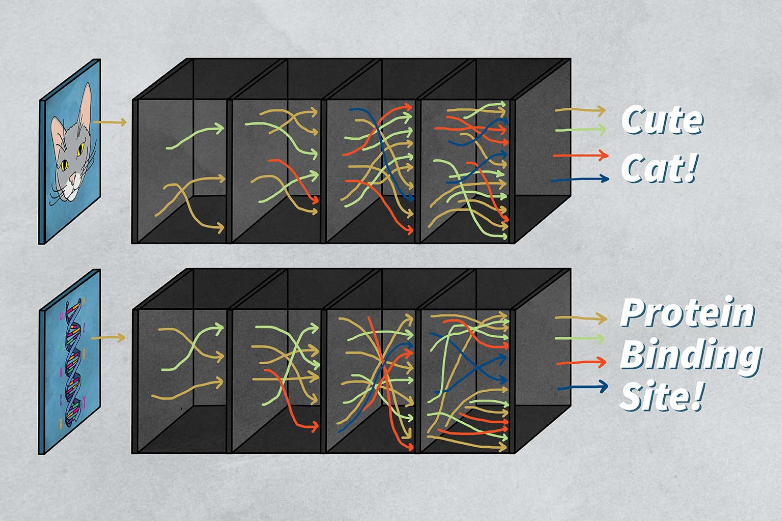
Convolutional Neural Networks models employ deep learning techniques using convolutional layers to automatically extract meaningful features from sequential data.
LSTM
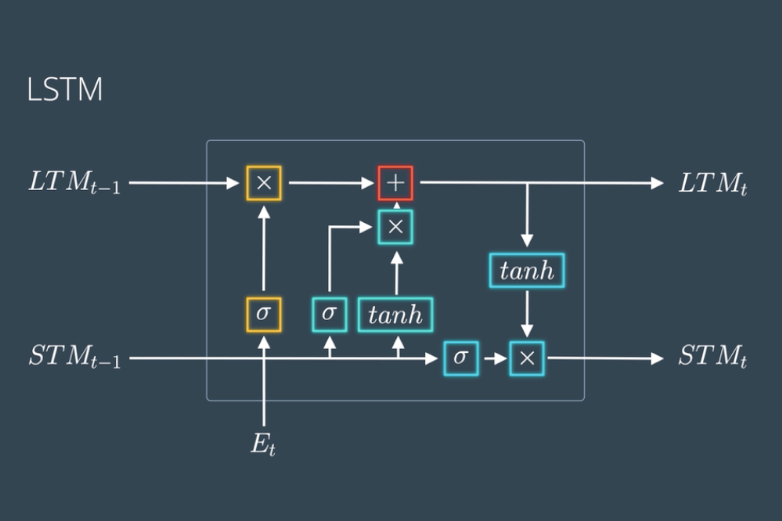
Long Short-Term Memory learns sequential patterns in data, particularly useful for processing and analyzing sequential or time-dependent information.
Advanced Techniques
Generating Vulnerabilities with LLMs
Meta-Prompting
Meta-prompting is an advanced technique where a Large Language Model (LLM) is used to generate or refine prompts for other LLMs. [5, 8] Instead of manually creating the perfect prompt, we instruct a powerful model to design the optimal prompt for a specific task. [7, 10] This approach shifts the focus from direct commands to creating a framework for how the AI should reason and structure its response. [9, 10] For the VAITP Framework, we use meta-prompting to create highly specific and effective prompts that guide LLMs to generate Python code with intentional, realistic vulnerabilities. This allows for more complex and nuanced vulnerability injection than single, static prompts would permit.
Retrieval-Augmented Generation (RAG)
Retrieval-Augmented Generation (RAG) is an AI framework that enhances the output of an LLM by connecting it to an external knowledge base. [1, 6] Before generating a response, the model retrieves relevant, up-to-date information from this authoritative source. [1, 2] This process grounds the LLM’s output in factual, specific data, increasing accuracy and reducing the chances of “hallucination.” [2, 3] In the context of the VAITP Framework, we employ RAG to feed the LLM with a curated knowledge base of real-world Python vulnerabilities and exploit techniques. [12] By retrieving examples of vulnerable code patterns and their corresponding fixes, the LLM can generate more accurate and contextually relevant vulnerable code snippets for our dataset. [11]
The VAITP Framework will soon be available for download, empowering researchers and developers to test and harden their systems against AI-generated threats.

Join our community, contribute and win rewards!